
Let’s talk about health data. Coaches always mention heart rate, HRV, and sleep. That’s the go-to trio. But lurking in the background is one key signal that ties all those together, and hardly anyone ever brings it up: your respiration rate.
Respiration rate isn’t sexy or trendy. But honestly, it’s one of the most revealing numbers you can track.
What is respiration rate?
It’s simple: the number of breaths you take every minute. That’s it, but don’t brush it off. A basic measurement like this tells you a lot about what’s happening under the hood: your nervous system, your stress, your recovery, whether your body’s humming along or struggling to keep up.
Here’s why you should care
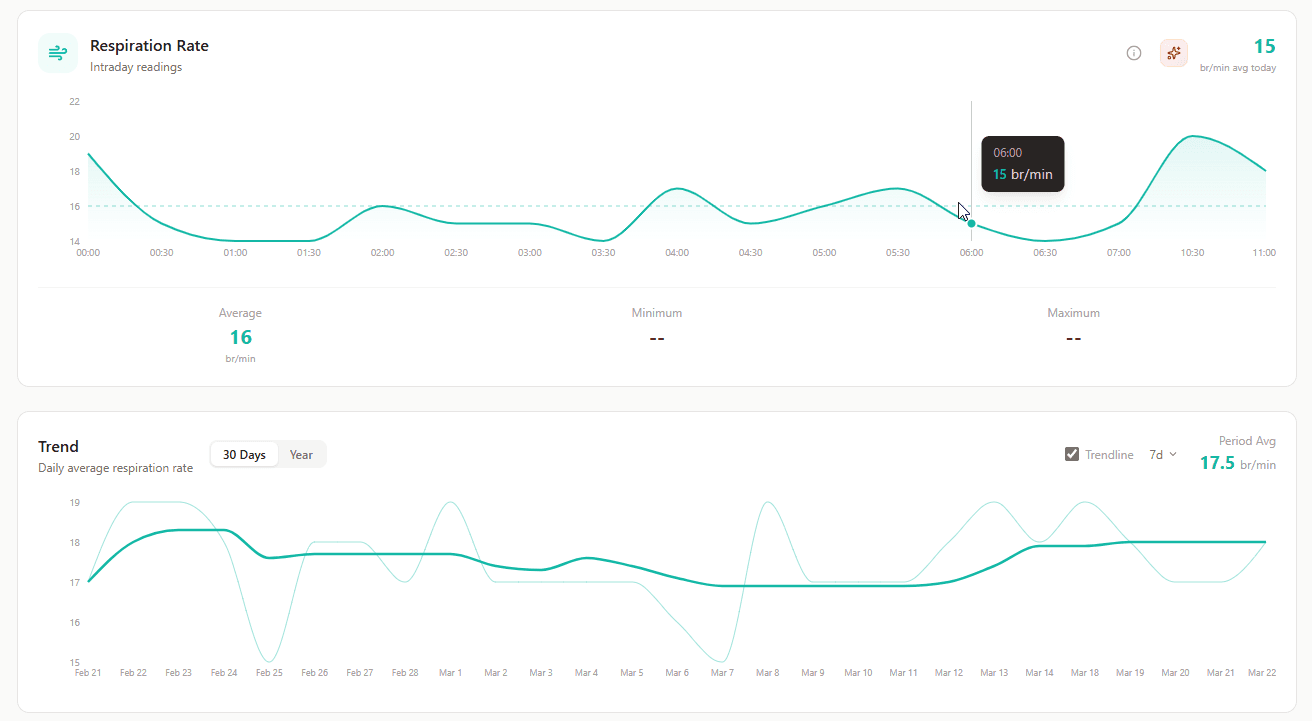
Respiration rate is always running in the background, always updating, and, unlike some metrics, you can’t fake it. It shifts fast. Stress? It goes up. Calm and rested? It settles right down.
At rest, this number really matters. Lower, steady breathing usually means your body’s recovering well, handling stress, and generally firing on all cylinders. But when your respiration creeps up at rest? That’s a red flag: fatigue, stress, or your system working overtime to keep up.
Let’s get real about stress
Most think of stress as just mental burnout, but the body experiences it much deeper. Under stress, your breathing speeds up, gets shallow, your nervous system shifts gears, and all those nice recovery processes get pushed to the back burner. When you finally do recover, your breath slows and evens out. That’s your body’s “all clear” signal.
For coaches, this data is gold. It offers a direct read on stress, whether your clients are actually recovering, and how well they’re managing real life, not just what they tell you.
It’s clinical
This isn’t pop science or fitness hype either, it’s clinical. Hospitals rely on respiration tracking, which means the metric is reliable. Platforms like CardioMood use validated technology (partnered with Haaglanden Clinics, to be specific), so you’re looking at real, accurate data, not guesswork.
Respiration rate doesn’t work alone
It’s connected to everything else. Fast breathing usually means lower HRV; slow, controlled breathing boosts it. Irregular breathing? Probably worse sleep. Steady breaths? Deeper, higher quality rest. Respiration is practically a stress meter, too: a higher rate shouts sustained stress, while a calm rate shows your system is bouncing back.
When you look at everything together: respiration, HRV, sleep, you can confirm patterns, catch weird inconsistencies, and actually see the bigger picture. This is where metrics start making sense.
Coaching Applications: Where This Becomes Practical
Respiration rate helps you spot early warning signs. Plenty of clients say, “I feel fine,” but their breathing tells a different story: stress is simmering under the surface, recovery hasn’t really kicked in. If that number stays elevated over time, you know something’s off. Maybe it’s time to adjust training or lifestyle, not just grind harder.
You can also see how breathing patterns tie in with sleep. Even if someone logs enough sleep, a restless night will show up in those respiration trends. You can get specific: notice changes when clients are drinking more caffeine, staying up late, or dealing with work stress.
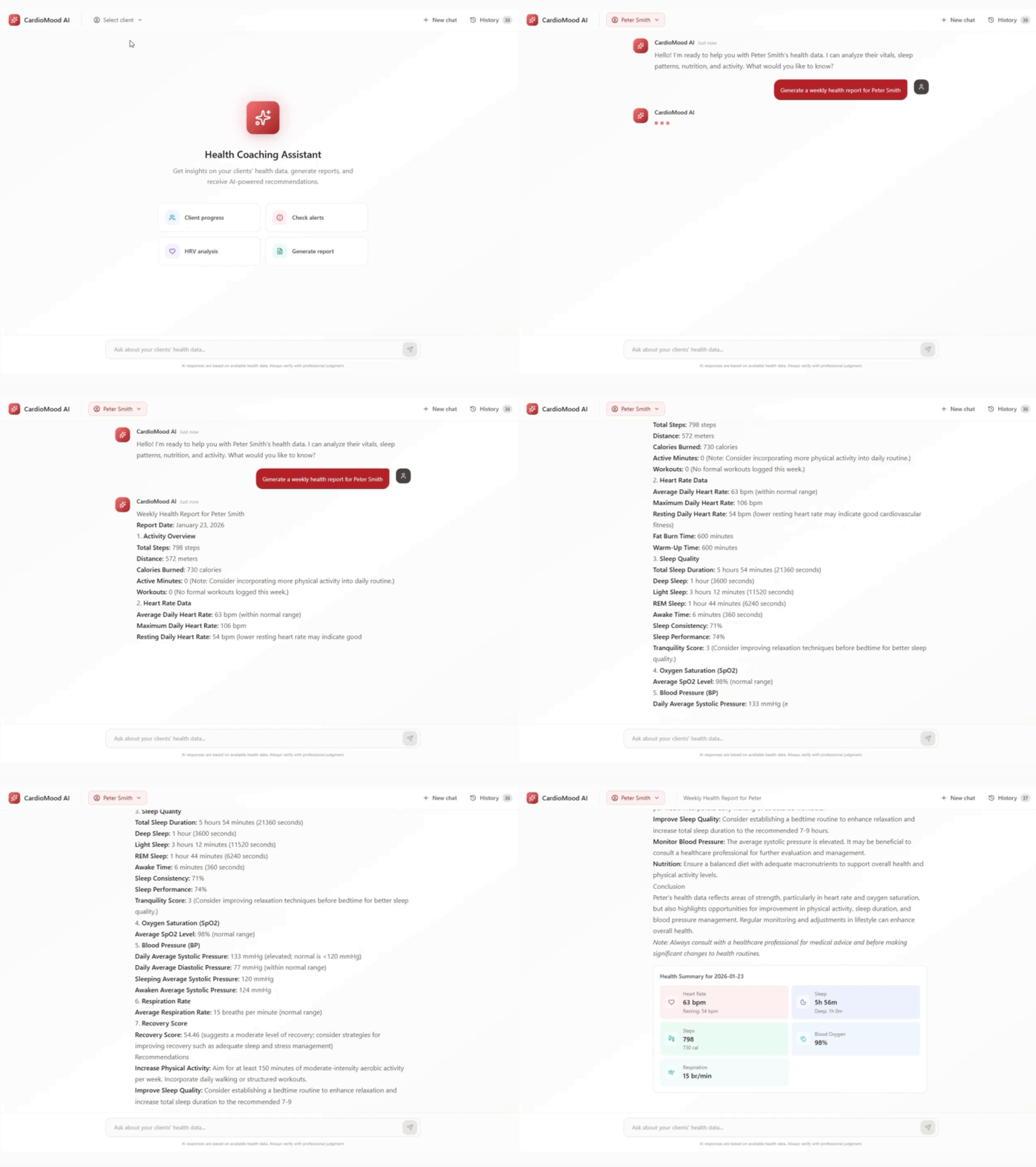
Platforms like CardioMood pull all this data together, so you’re not playing detective, you have a connected readout showing where stress is coming from, how recovery is going, or when someone’s headed for burnout.
A quick example
Say a client gets enough sleep, but their HRV dips and their respiration rate climbs. The system’s still under pressure. Now you know to ask about recent stress, ease up on the program, or double down on recovery before major problems show up.
Why do most coaches skip this? It’s not because it doesn’t work, it’s just less familiar, rarely discussed, and not every wearable tracks it. But that’s exactly why it’s worth your attention.
The missing link
Respiration rate won’t replace the basics. But it fills in the gaps. It adds context. And context is the difference between just having data and actually using it to get results.
Want a clearer, deeper read on recovery and stress? Try CardioMood. Go beyond the basics, see what you’ve been missing.