
Spring hits and everything shifts into high gear.
You’re training more. Sessions get tougher. Goals start to matter again. Runners chase races, cyclists tack on miles, teams jump back into competition. Spring training is when the magic, or the mess, begins.
Most athletes lock in on one goal: training harder. But the real secret? Progress comes from recovery.
Why spring training gets tricky
After a slow winter, your body’s not always ready for the jump. Even if your brain is.
Here’s what usually happens:
- Training ramps up too fast;
- Recovery routines stay stuck in winter mode;
- Sleep stays all over the place;
- Fatigue sneaks up.
At first? You feel fine. Then, almost out of nowhere:
- Performance flatlines;
- You can’t find your motivation;
- Little aches turn into injuries.
The missing link: actually tracking recovery
Most athletes still guess:
- “How do I feel today?”
- An extra rest day, here and there.
- Whatever someone else says worked for them.
That doesn’t cut it when you’re pushing hard.
What you really need to know is simple:
Is my body keeping up or falling behind? Should I push or actually back off today?
This is where recovery metrics change the game. Stop guessing and start tracking:
- Recovery score
- Sleep quality
- HRV trends
These numbers show what your body’s actually dealing with.
Recovery scores: The daily gut check
Think of your recovery score as a morning signal. Not a command, just a strong hint.
What does it really reflect?
- How ready your nervous system is
- Whether the recent load matches your recovery
- The big-picture state of your body
How do you actually use it?
- High score? Push it.
- Middle of the road? Maintain.
- Low? Ease up or focus purely on recovery.
If you keep training hard when your recovery score is down, you’re not getting fitter, you’re just digging yourself a deeper hole.
Sleep: Still the biggest blind spot
You can’t outrun bad sleep. Plenty of athletes give it a shot anyway.
Not enough sleep:
- Slows your recovery
- Raises your risk of getting hurt
- Messes with focus and performance
Track:
- How long you sleep
- How much deep, light, and REM you get
- Whether your routine is at least somewhat consistent
It doesn’t have to be perfect. Just consistent. Even small upgrades in sleep help you recover faster, stay steady, and actually improve week after week.
Training load: Find the sweet spot
More is not always better. Smarter always is.
Balance the stress from workouts with actual recovery: sleep, rest, food.
Most common mistake? Piling on volume and intensity but not changing anything about recovery. Watch out for these signals:
- Falling HRV;
- Worse recovery scores;
- Workouts start to feel harder than they should;
Spot these early and you can course-correct before real problems start.
It’s all connected
Recovery isn’t just one box to check, it’s a whole system. Mess with your sleep, your recovery score tanks. Miss recovery, and your training capacity drops. Keep pushing through that? Hello, burnout!
But with the right data, you start seeing the patterns and you spot issues before they sideline you.
Keep it simple
Worried you’ll obsess over every number? Don’t.
Just:
- Glance at recovery each morning
- Check sleep patterns once a week
- Shift your plan only when you spot a real trend
Do this, and you dodge overtraining, random burnout, and all those injuries that don’t need to happen.
How CardioMood fits in
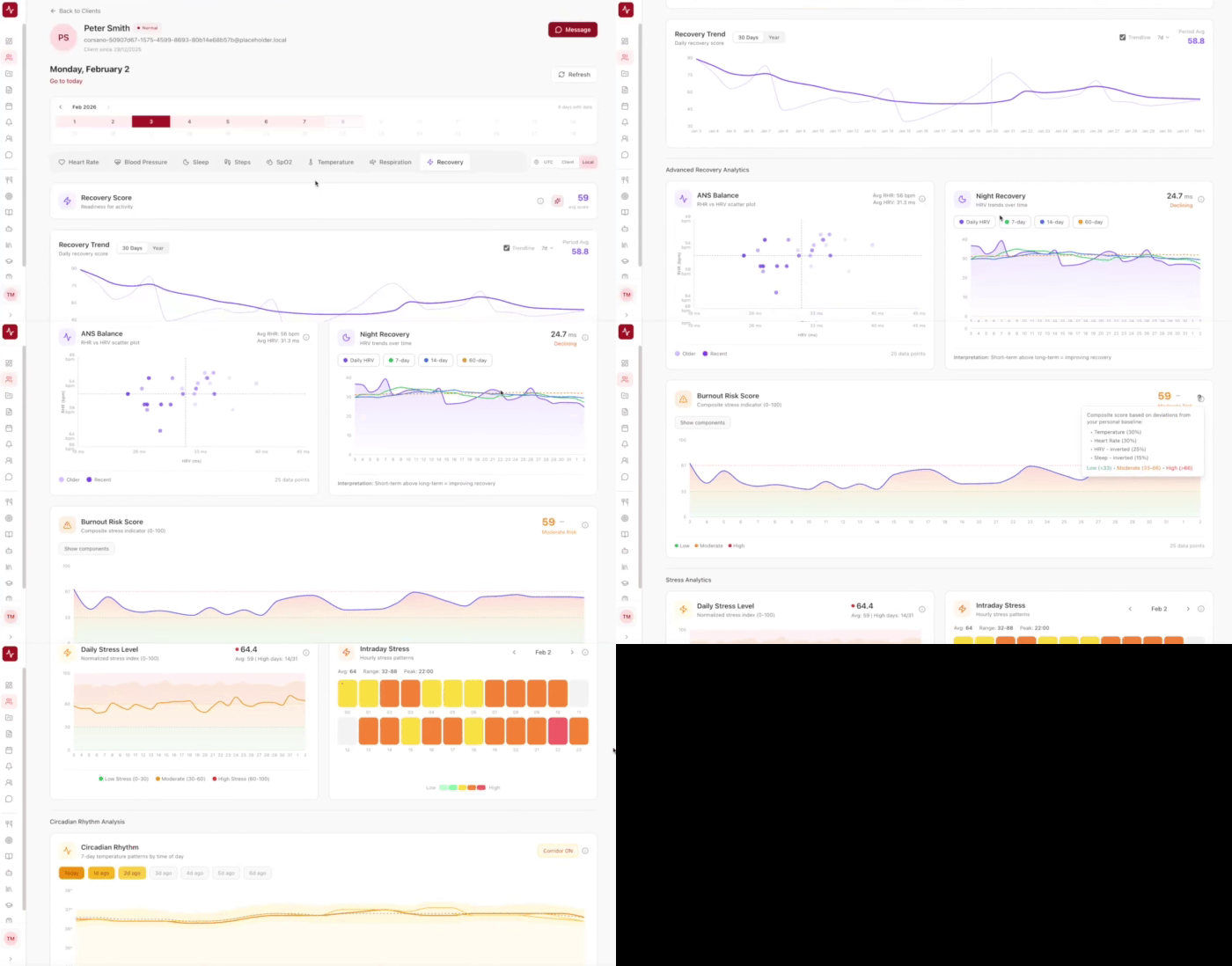
CardioMood ties it all together, tracking your sleep, stress, and training load automatically. No more guesswork. You and your coach see how your body responds in real time, so changing workouts or planning recovery gets a lot easier: no manual input, no lost data, just real insight right when you need it.
Bottom line
Spring training isn’t just about piling on fitness. It’s about building something you can actually hold onto. Because the athletes who last and improve aren’t cranking out the most sessions, they’re the ones who get recovery right.
Train smarter this season and optimize your recovery with CardioMood.
Featured image: Pexels: A Woman in an Activewear Stretching at the Running Track