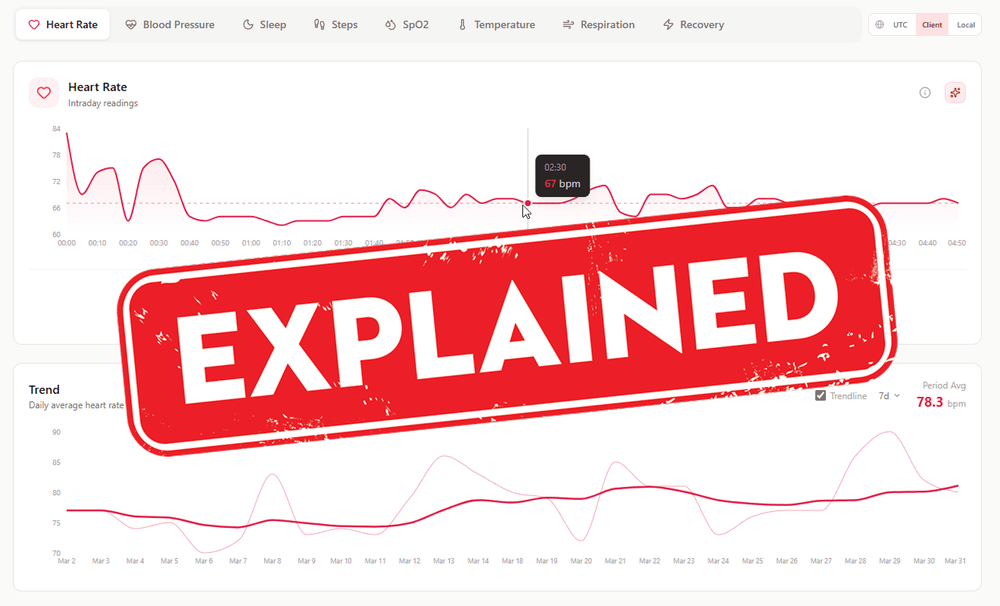
The Metric That Changed Everything
About three years ago, I watched a performance coach completely miss the warning signs that her client was headed straight for burnout.
On paper, the client looked solid. He hit every workout. Ate clean. Slept eight hours a night. He kept insisting he was "fine," but his results slowly flatlined, then dipped. The coach’s solution? Push harder. That backfired: he crashed two weeks later and took three long months to recover.
What did she miss? His heart rate variability was dropping, week after week, screaming that his nervous system was in trouble. She had the data but just didn’t know what it meant.
That’s the story with HRV. Once you get it, it’s one of the most powerful signs of stress and recovery. But if you don’t know what to look for, it can totally throw you off.
Let’s clear things up.
What HRV Actually Measures (And Why It Matters)
Heart rate variability (HRV) sounds technical, but the idea’s simple.
Your heartbeat isn’t a ticking clock. Even if your heart rate is 60, those beats aren’t evenly spaced: sometimes there’s 0.9 seconds between them, sometimes 1.1. That variability? That’s HRV.
Here’s what throws people off: more variability is better.
It feels backwards, right? Isn’t a steady beat healthy? Actually, not really. A healthy heart shifts rhythm based on what you need. This back-and-forth is how your body shows it can adapt and bounce back from stress.
Picture two drivers speeding down the highway. One stubbornly locks in 65 mph no matter what; ignoring traffic, curves, anything. The other adjusts naturally: slowing down, speeding up, handling every turn. Who’s really in control? The flexible one.
Same goes for your heart. If your body can easily shift from full throttle to resting mode, that’s a sign your nervous system is working well. That’s what HRV measures.
The Two Branches Fighting for Control
Here’s what’s really going on inside: You’ve got two branches in your nervous system constantly battling for the wheel.
The sympathetic nervous system - think of it as your gas pedal. It speeds your body up, gets you ready to fight or run. When it’s dominating, your heart beats more like a drum machine: regular, predictable, low HRV.
The parasympathetic system - the brakes. Rest, recover, digest. When it’s in charge? Beats get more unpredictable. High HRV.
A healthy body jumps back and forth easily. But if you’re running on stress all the time, the sympathetic system digs in, and your heart loses its flexibility. HRV drops, and you’re at risk for burnout.
That’s why HRV is often called a window into your autonomic nervous system, it shows which side is winning.
Why HRV Is the Gold Standard for Recovery
Most fitness metrics have quirks. Caffeine messes with your heart rate. Sleep trackers fudge the numbers. Step counts mean nothing for effort.
But HRV? Impossible to fake. You can’t muscle your way into better HRV. It shows exactly how your nervous system’s really doing, even if you think you’re okay.
That’s why researchers rely on it, and once you tune into it, you’ll wonder how you ever coached without it.
What HRV Reveals That Nothing Else Can
-
Recovery status. Is your client really recovered from yesterday, or do they just think they are? Their resting heart rate might seem fine. They might swear they feel good. But if HRV is down, their nervous system disagrees.
-
Stress build-up. Chronic stress creeps up slowly. Your client feels fine - until they don’t. HRV tells the truth. If it starts sliding for days or weeks, stress is piling up faster than they can handle.
-
Illness prediction. This one’s wild: HRV usually drops 1-3 days before someone feels sick. Their body knows it’s fighting something before their brain does. Spot that dip early, back off training, and sometimes you can dodge the worst.
-
Adaptation vs. maladaptation. Is the program making your client healthier or just wearing them down? Watch their HRV over weeks and months - you’ll get a clear answer.
-
Overtraining. Overtraining can set someone back for months, but HRV flashes the warning well before a crash. Spot trouble early, and you can save them a world of hurt.
The Number One Mistake People Make With HRV
Most people focus on the raw number. “My HRV is 45. Is that good?” That question misses the point.
HRV is personal. Someone can be healthy and recovered with an HRV of 40; someone else can be run down at 80.
Age, genetics, years of training, even how you measure (lying or sitting) all matter.
Comparing client to client? Useless. Comparing someone’s current number to six months ago? Not helpful.
You’ve got to look at the trend compared to their own normal. That’s where the insights are.
How to Actually Read HRV
Let’s say your client’s morning HRV usually hovers around 60. That’s their baseline.
-
Scenario 1: HRV is 75 this morning. Excellent. They’re recovered, ready to train hard.Excellent. They’re recovered, ready to train hard.
-
Scenario 2: HRV is 45 this morning. Worrying. Down 25% from their norm. Something’s stressing the system tough workout, poor sleep, looming cold, or life stress.
-
Scenario 3: HRV bounces between 55 and 65 all week. Totally normal. Minor day-to-day changes don’t mean much.
-
Scenario 4: HRV drops steadily from 60 to 55 to 50 and stays there. Major warning sign, stress is building up. Time for extra rest or to figure out what’s dragging them down.
It’s about trends, not numbers.
CardioMood’s HRV Accuracy: Why It Matters
Here’s the truth most people miss: not all HRV data is reliable.
Many fitness trackers measure HRV, but the readings jump around: different methods, different time windows, different accuracy.
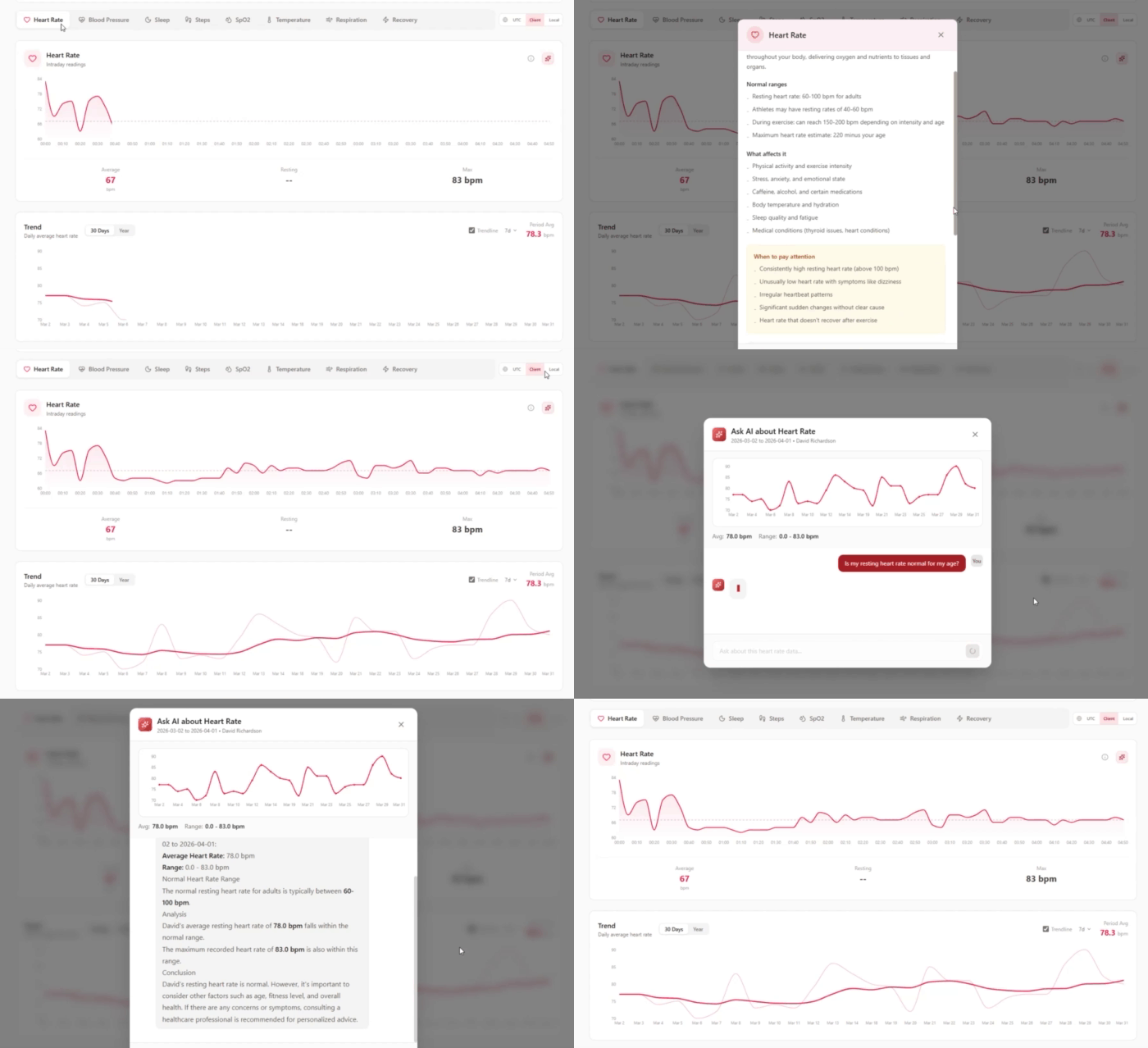
CardioMood’s HRV tracking is matched against hospital-grade ECGs at 99.2% accuracy. Tested in real clinics, with peer-reviewed proof.
 Why does this matter for coaches?
Because if your measurements aren’t solid, the trends are just noise. You might overreact to nonsense and miss real problems.
Accurate HRV lets you know what’s truly happening inside your clients, not guesses, but real change.
How to Use HRV in Your Coaching (Practical Applications)
Knowing what HRV means is great. Knowing how to use it day-to-day is what actually matters.
The Daily Training Decision
Your client checks HRV every morning; you compare it to their 7-day average.
- HRV at or above baseline? Stick to the plan, intensity is fine.
- 10-20% below baseline? Ease off: cut volume or intensity, but don’t cancel everything.
- 20%+ below baseline? Only light movement: walk, stretch, skip the hard stuff.
This approach keeps you from burning clients out, but you’re not letting them coast, either. You maximize good days and avoid digging unnecessary holes.
Stress Management Tool
Sometimes clients say, “I’m doing fine.” HRV says otherwise.
That opens the door. “Your HRV dropped 30% over three weeks. That’s your body telling a different story. What’s really going on?”
Suddenly, clients are willing to talk stress, sleep, or whatever else they usually shrug off. Plus, HRV gives you hard proof that your interventions; whether it’s meditation or breathwork, are working or not.
Illness Predictor
You’ll spot the pattern: about two days before a client reports being sick, HRV plummets.
As coach, you reach out: “Your HRV crashed, how are you feeling?” Maybe they insist they’re fine, but you have them back off hard training, sleep more, focus on recovery.
Sometimes, they dodge the worst. Or, if they get sick, they recover faster. You stop stacking stress on top of an already-threatened system.
The Adaptation Tracker
Play the long game. Over months of smart training, your client’s HRV baseline should climb. Someone who starts at 45 might rise to 50 or 55.
That’s adaptation. Their system is more resilient, more flexible. If it flatlines or drops, something’s off: training too hard, recovering too little, or other stress outside training.
If HRV sinks for months, they’re digging a hole. Restructure everything.
Common HRV Mistakes and How to Avoid Them
Even coaches that know HRV fall into these traps.
-
Mistake 1: Freaking Out Over One Low Reading HRV was 60 yesterday and 50 today, you panic. Don’t. A single low number means almost nothing. Look for patterns over three to five days before changing plans.
-
Mistake 2: Not Asking Why HRV shows that stress is up or recovery is down. It doesn’t say why. Investigate. Sleep bad? Stressed at work? Getting sick? Find the reason, don’t just tweak workouts blindly.
-
Mistake 3: Chasing the Highest Number Some clients get obsessed with pushing HRV higher. But your goal isn’t to maximize HRV; it’s to see it respond appropriately to stress and recovery. Big training days? HRV will dip. It should. The problem is if it never bounces back.
-
Mistake 4: Inconsistent Measurement HRV is sensitive. Time of day, body position, hydration, caffeine - all can nudge the numbers. For clean trends, measure the same way each morning: ideally lying in bed, before you move, same time, same place.
-
Mistake 5: Thinking HRV Tells You Everything It’s probably the best recovery metric out there. It’s not magic. Use HRV alongside sleep, how the client feels, how they perform, and other stats. What "Good" HRV Actually Looks Like
But what’s a good number? There isn’t one magic answer.
What does a healthy pattern look like? It’s about the rhythm:
- Baseline stays consistent, with daily moves of about 10-15%
- HRV rises after rest or good sleep
- Dips after hard sessions, then rebounds
- Baseline creeps up after long stretches of balanced training
- HRV bounces back quickly from stress (back to normal in a couple of days)
Unhealthy patterns:
- Downward trend for weeks
- Always low, even on rest days
- Wild swings day-to-day
- HRV doesn’t recover after hard effort
- Keeps dropping, even with more rest
Again, it’s about the trend. The numbers themselves are personal.
The HRV Coaching Conversation
Clients don’t care about the deep science. They want simple direction.
Here’s how I explain it:
“HRV shows how well your body flips between stress and recovery. Higher is usually better, but it’s really all about your personal trend. High HRV means you can train hard. Low? You need rest. We’ll check it every morning and adjust your workouts.” That’s it. For clients who like details, explain sympathetic/parasympathetic balance - the gas vs brake thing.
For data nerds, show them the charts. Teach them how to read their own patterns.
For everyone, the message is the same: HRV keeps us from overtraining, lets us push when ready. That’s all most people need.
When HRV Doesn’t Tell the Whole Story
Don’t forget the limits:
- It doesn’t measure fitness. You can be fit and have low HRV, or not fit and have high HRV.
- It doesn’t track motivation or mood. Someone might have high HRV but still need a mental break.
- Sometimes HRV drops for entirely normal reasons like heavy weight training. That’s not a crisis; it’s just adaptation.
- Stuff like alcohol, lousy sleep, or stress can tank HRV for a day, but you usually don’t need to overhaul everything for a one-off dip.
Bottom line: HRV gives you data. You apply context.
Advanced Application: Using HRV to Periodize Training
Once you’ve got the basics, HRV makes flexible training schedules easy. Instead of forcing “three weeks hard, one week recovery,” let HRV steer you.
- During heavy phases: Keep going if HRV is above 85-90% of baseline. If it dips below that for a few days, it’s time for a recovery block.
- During recovery: Wait for HRV to come back to baseline before ramping up again. However long it takes, you follow the body, not the calendar.
This way, training matches recovery - no wasted rest, no accidental overtraining. Way more effective.
The Bottom Line on HRV
If you’re going to get serious about one health metric, make it HRV. Not because it’s the only thing that matters, but because it tells you what’s hardest to see: is a client truly recovering, or are they sliding toward burnout? You can watch sleep. You can track performance. You can ask how they feel. But you can’t just eyeball their nervous system. By the time you see mood changes or illness, it’s already late. HRV gives you the heads-up before things get ugly.
That’s why mastering HRV - really understanding how to read and coach with it, makes your coaching miles better. Not just because you know more, but because you use better data, and use it well.
Your clients may not care about the science, but they’ll feel the results when you help them avoid burnout, catch illness early, and get the most from each training cycle.
That’s the difference between good coaching and great coaching.
Start Using HRV Today
Watch how CardioMood shows HRV trends, patterns, and uses smart interpretation to make your decisions sharper. CTA Button: Try CardioMood DEMO
Start tracking. See the difference.