
Most clients think sleep is simple.
You go to bed, you sleep for 7-8 hours, you wake up. Done.
But if you’ve worked with more than a handful of people, you’ve probably seen this pattern:
“I slept enough... but I still feel exhausted.”
And that’s usually the moment you realize sleep duration alone tells you almost nothing.
So what’s actually going on during sleep?
Sleep isn’t one continuous state. It’s more like a cycle your body moves through over and over again.
Light sleep. Deep sleep. REM. Repeat.
That pattern: how long someone spends in each stage, how smoothly they move between them, is what we call sleep architecture.
And honestly, this is where things start to get interesting for coaching.
Because two clients can both sleep 7 hours... and have completely different recovery outcomes.
Let’s break down the stages (without overcomplicating it)
You don’t need to be a sleep scientist to use this in practice. But you do need to understand what each stage is roughly responsible for.
Light Sleep: where most of the night goes
This is the biggest chunk of sleep. Around half, sometimes more.
It’s not useless, despite the name, but it’s not where the magic happens either.
Think of it as the “background layer”:
- Your body is winding down
- Systems are stabilizing
- You’re transitioning between deeper phases
Where it becomes a problem is when it takes over too much of the night.
You’ll see clients who technically “slept” for 7-8 hours... but most of that time was light sleep.
And they wake up feeling like nothing really happened.
Deep Sleep: the physical reset
This is the one everyone cares about once they understand it.
Deep sleep is where the body actually repairs itself:
- Muscles recover
- Hormones rebalance
- The immune system does its thing
If someone is training, stressed, or run down - this stage matters a lot.
And here’s something you’ll notice pretty quickly:
When deep sleep drops, everything else starts to wobble. Energy, recovery, even motivation.
REM Sleep: the mental side of recovery
REM is less about the body and more about the brain.
This is where:
- Memory gets processed
- Emotions get regulated
- Mental fatigue gets “reset”
When REM is off, clients don’t always say “my sleep is bad.”
They say things like:
- “I feel off”
- “I can’t focus”
- “I’m more irritable than usual”
Which makes it easy to miss if you’re only looking at total sleep time.
What “good sleep” actually looks like (in real life)
Here’s where many coaches (and clients) get tripped up.
There’s no such thing as a “perfect” night of sleep.
What you’re really looking for is a pattern over time:
- Deep sleep showing up regularly (not necessarily every night)
- REM increasing toward the morning
- A relatively smooth flow between stages
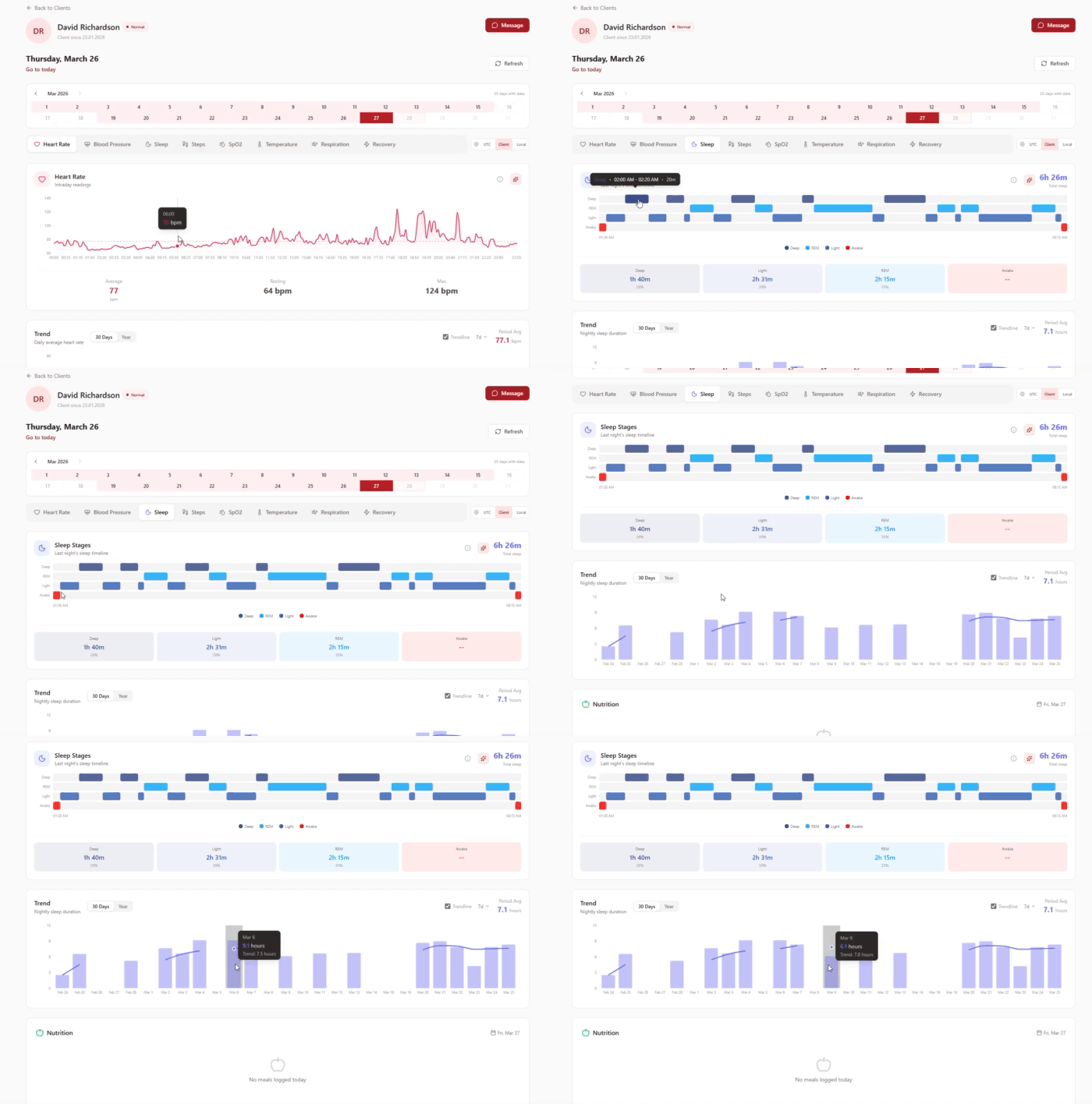
This is where having visual data helps a lot.
Instead of guessing, you can literally see:
- How last night unfolded (sleep stages timeline)
- How things are trending (nightly duration over time)
And sometimes that visual alone changes how a client understands their sleep.
One night doesn’t mean much (seriously)
This is worth repeating because it’s such a common mistake.
A client has one bad night... and suddenly everything feels like a problem.
But sleep fluctuates. That’s normal.
What actually matters is:
- The last 7-14 days
- Repeating patterns
- Gradual shifts
If deep sleep is low one night, ignore it. If it’s low for a week, now it’s something to look at.
A few patterns you’ll start noticing
Once you look at sleep this way, certain things show up again and again.
Low deep sleep + high stress
This combination is everywhere.
Clients are:
- Overstimulated
- Mentally “on” late into the evening
- Sometimes overtraining on top of it
And their body just... doesn’t drop into recovery mode properly.
Low REM + mental fatigue
This one is subtle.
Sleep duration looks fine. But the client feels foggy, unfocused, or emotionally drained.
That’s often a REM issue, not a “sleep hours” issue.
Messy, fragmented sleep
Lots of transitions. Broken timeline.
Usually means the sleep is shallow and interrupted, even if the total hours look decent.
How this connects to HRV, stress, and recovery
This is where things start to click.
Sleep isn’t separate from everything else - it’s tied into the same system.
- Poor sleep → lower HRV
- High stress → less deep and REM sleep
- Low recovery → shows up in both sleep and daytime metrics
It’s all connected.
And once you see that, you stop treating sleep as a standalone problem.
Using sleep data in coaching (without overthinking it)
You don’t need complicated frameworks here.
What works best is actually pretty simple.
1. Look at trends first
Always zoom out before zooming in.
2. Connect it to behavior
Sleep data only becomes useful when it answers:
“What caused this?”
3. Keep your recommendations realistic
If your advice requires perfect discipline, it won’t stick.
Small, repeatable changes win here.
Why a lot of sleep tracking still gets it wrong
This part matters more than most people realize.
A lot of consumer devices:
- Rely heavily on movement
- Use simplified models
- Struggle to accurately separate sleep stages
So you end up with data that looks detailed... but isn’t always reliable.
What’s different with medical-grade tracking
The main difference is the quality of input data. CardioMood approaches sleep tracking differently:
- Sleep stages timeline and trends: see how last night unfolded and how sleep duration evolves over time
- Continuous physiological data: capturing heart rate, HRV, respiration, and other core body signals for deeper sleep insights
- Clinically validated measurements: aligned with medical-grade standards
- Integrated insights: combining heart rate, HRV, and respiration for a more complete picture
This allows for:
- More accurate sleep stage detection
- Better context for interpreting data
- Stronger coaching decisions
Where this actually helps you as a coach
At the end of the day, this isn’t about understanding sleep for the sake of it.
It’s about making better decisions.
When you can see real patterns, you can:
- Adjust training more precisely
- Spot early signs of burnout
- Explain things to clients in a way that actually makes sense
And that last part is underrated.
Because when clients see what’s happening, they buy in much faster.
Final thought
Most people think better sleep comes from trying harder. In reality, it comes from understanding what’s actually happening. And once you can see the structure behind sleep, not just the hours: everything gets a bit easier to work with. If you want to go beyond “hours slept” and actually understand your clients’ recovery, try CardioMood and start working with real sleep patterns, not guesses.
Featured image: Pexels: Woman Sleeping on a Bed